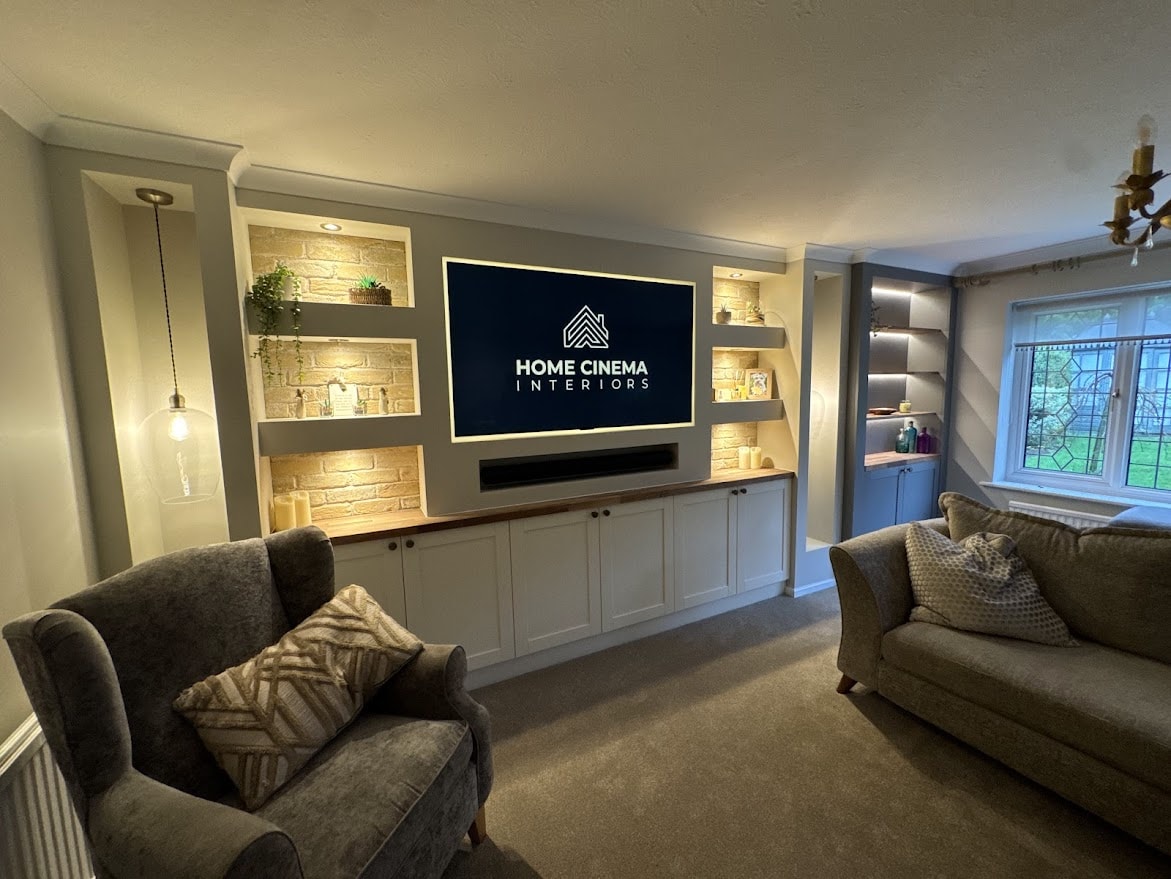
A Media Wall can completely transform a living space. It can create a focal point, bring together your television, fireplace, storage and lighting, and even provide a way to integrate your home entertainment technology more discreetly.
But a great Media Wall is about much more than deciding where the TV goes.
The best designs consider the room as a whole, the way the space is used, the technology that needs to be incorporated and, importantly, how the finished installation will look and feel within the home. They should be designed to echo the architecture and style of your home, much like kitchens and bathrooms.
At Home Cinema Interiors, we combine our expertise in AV installation, carpentry and interior design to create Media Walls that are designed around each individual home. Here are some of the key decisions worth considering before starting your project.
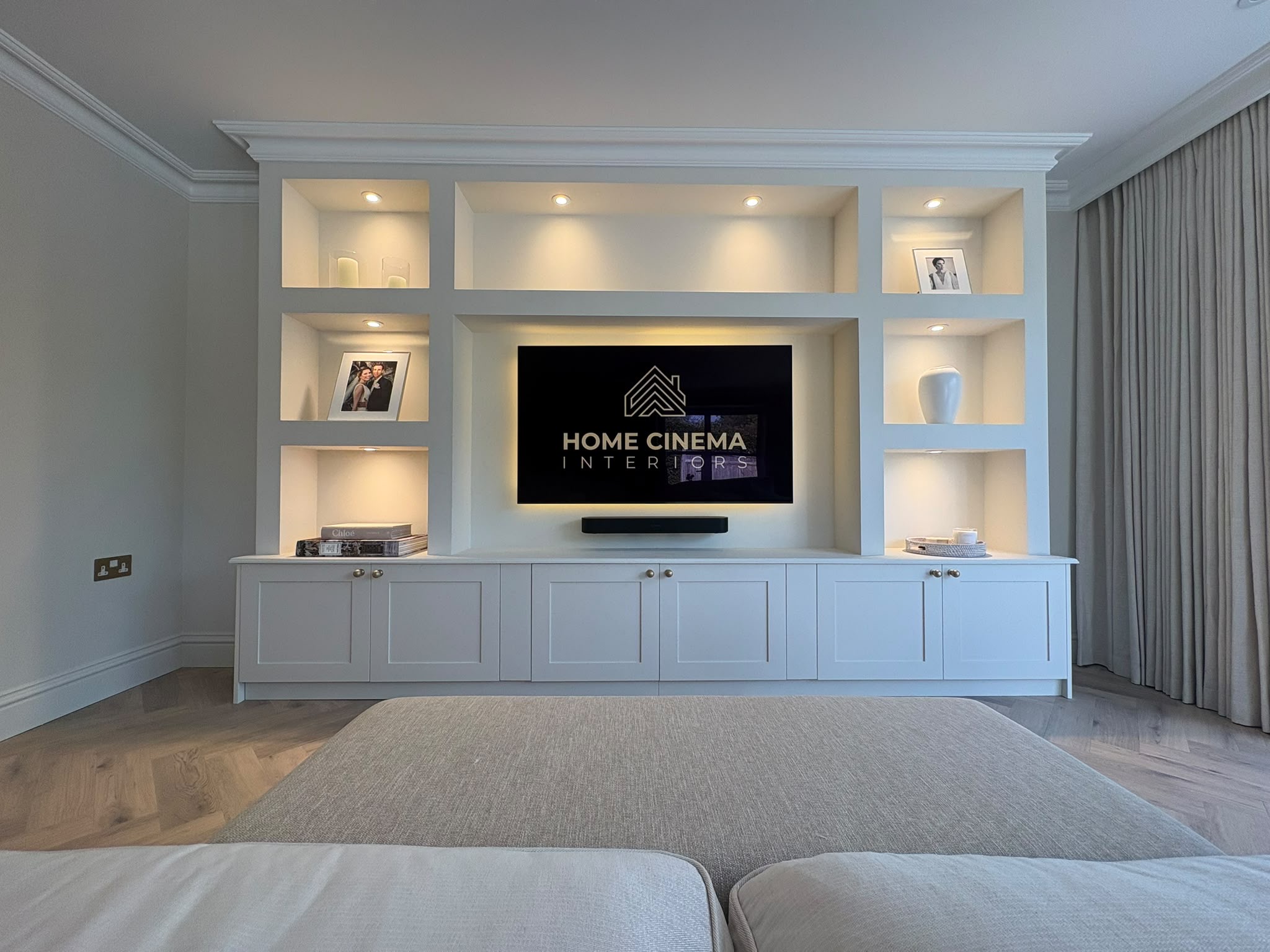
Media Wall with Storage and Shelving
1. What do you actually want your Media Wall to achieve?
The first question isn’t necessarily “What should it look like?” but “What do I need it to do?”
For some homeowners, the television is the main priority and they simply want a clean, elegant focal point.
For others, the media wall might need to incorporate:
- A television
- An electric fire
- Storage
- Display shelving
- Soundbars or surround-sound speakers
- Games consoles
- Sky, Apple TV or other streaming equipment
- AV receivers and other technology
- Decorative lighting
- Feature lighting
- Display areas for artwork or accessories
Understanding what you want the wall to achieve from the outset helps determine the right type of media wall for the room.
2. What type of Media Wall is right for your home?
There isn’t one solution that works for every property.
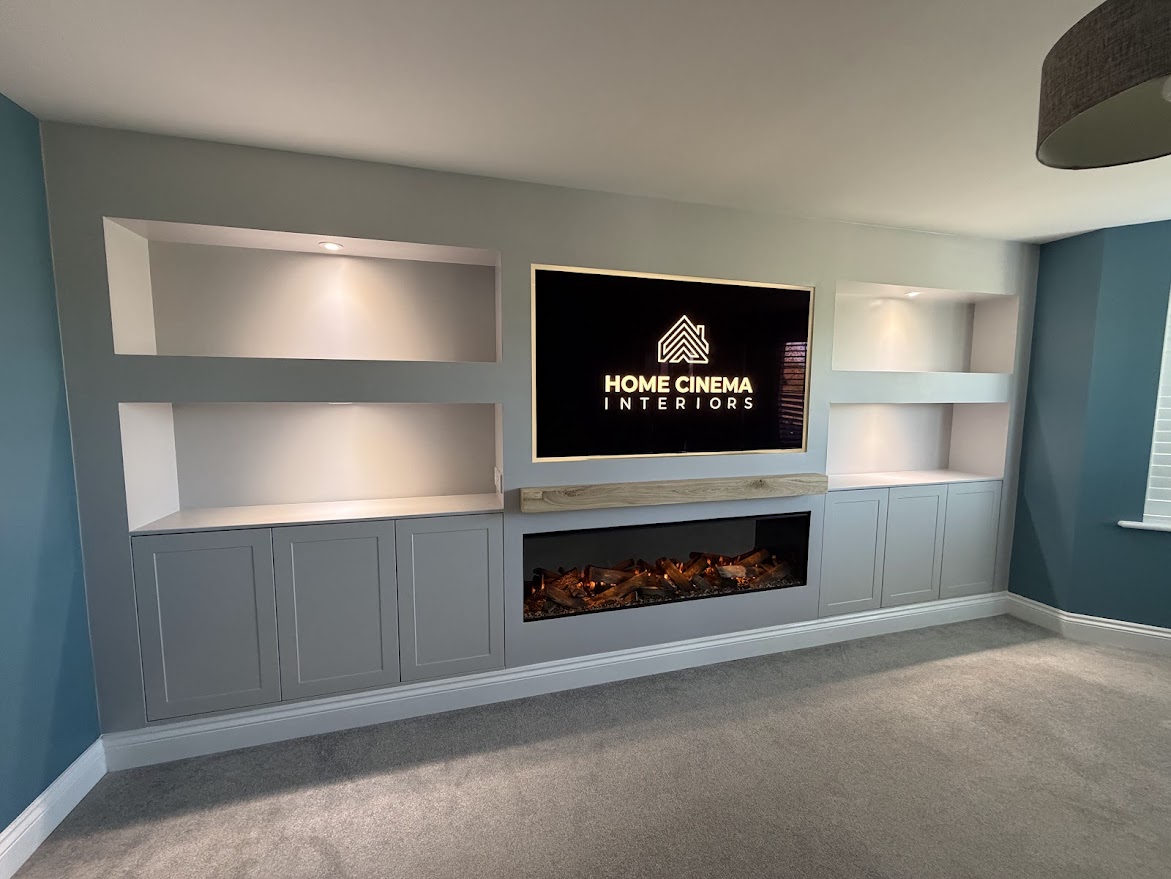
A traditional Chimney Breast Media Wall can create a strong architectural focal point, often incorporating a television and fire within a symmetrical design.

Chimney Breast Media Wall
A Shelving and Storage Media Wall can provide considerably more functionality, with cabinetry and display shelving surrounding the TV.
Shelving and Storage Media Wall
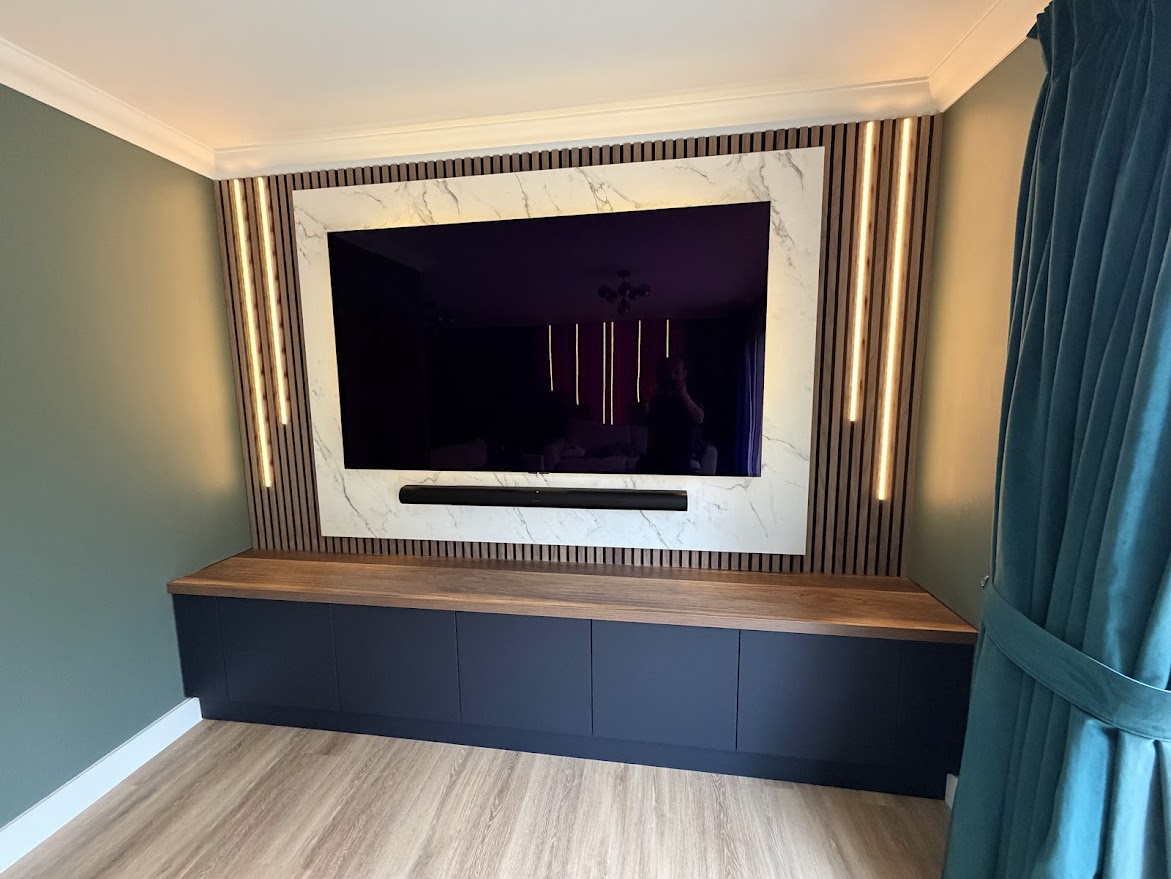
Alternatively, a Bespoke Feature Wall or No-build Media Wall can achieve a very similar visual impact without constructing a full plasterboard wall.
Bespoke Feature Wall
This could involve wall-mounted cabinetry, slatted or decorative panelling, a fireplace, integrated lighting and a professionally mounted television, while creating significantly less disruption to the room.
Choosing between these approaches is one of the most important decisions to make and it is often influenced by the property, budget, timescale and how permanent you want the installation to be.
3. Where should the television be positioned?
The television will usually be the anchor point of the entire design, so its position needs careful consideration.
It isn’t simply a case of putting the TV on the centre of the wall.
The viewing position, seating height, distance from the screen, size of the television and proportions of the room should all be considered.
The furniture and other elements of the Media Wall also need to work around the TV rather than making it feel like an afterthought.
This is particularly important with larger screens. An 83-inch OLED, for example, creates a very different set of design considerations to a 55-inch television.
4. What size should the TV be?
A Media Wall is an opportunity to reconsider your television size rather than simply designing around your existing screen.
As televisions have become increasingly slim and larger screen sizes have become more accessible, many homeowners are choosing significantly larger displays than they previously would have considered.
However, bigger isn’t always better.
The correct screen size depends on the room, viewing distance and how the television will be used. A well-designed Media Wall should make the television feel appropriately proportioned within the overall space.
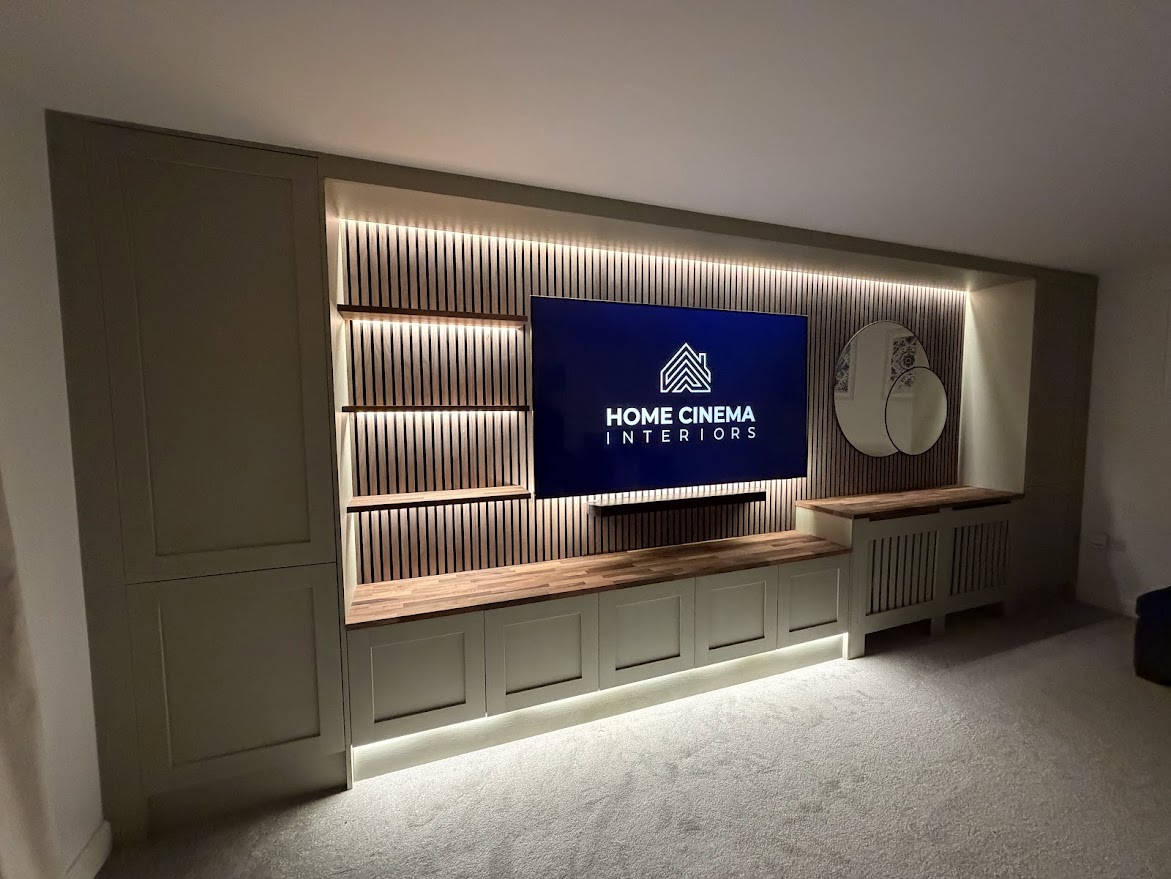
Media Wall, Slat Panelling, LED Lighting & Storage
5. Do you want a fire?
The combination of a television and fireplace has become one of the most popular features of a Media Wall.
An electric fire can provide warmth, ambience and another visual focal point beneath the television.
However, the choice of fire, its dimensions and its position all need to be considered carefully.
The proportions between the TV and fire are particularly important. A fire that is too small can look lost within the design, while one that is too large can dominate the room.
Electric fires are not only a design feature but the heat air technology works well to heat room and homes, especially in the times that you’re not quite ready to put the central heating on.
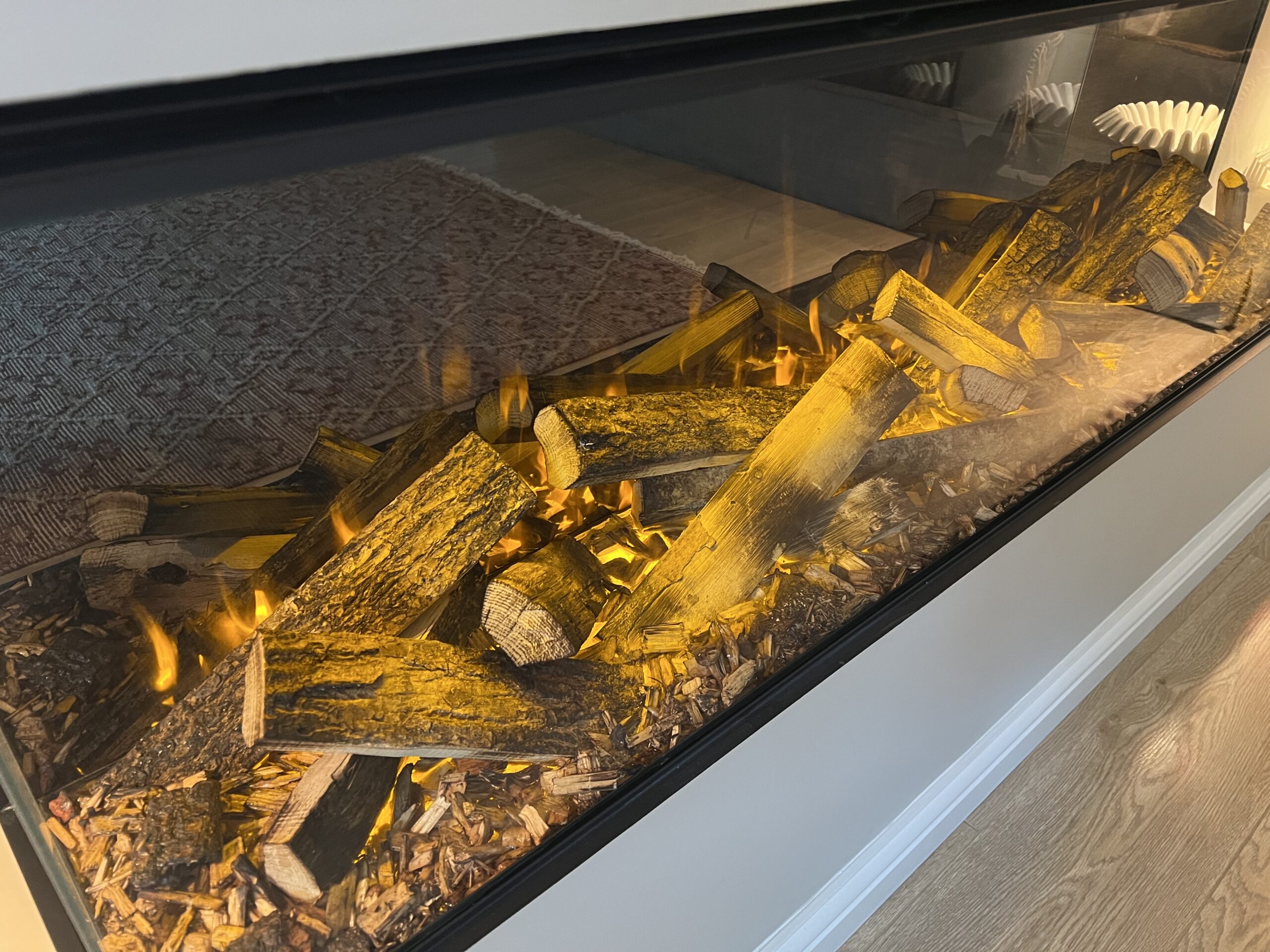
New Forest Electric Fire

Media Wall, Slat Panelling, Oak Worktop, Smart Lighting & Storage
6. How much storage do you need?
One of the major advantages of a media wall is that it can solve several problems at once.
Instead of having a television, soundbar, games consoles, ornaments, books and other equipment spread around the room, a bespoke design can bring everything together.
Storage can be completely concealed behind doors or drawers, while open shelving can provide somewhere to display personal items.
The important thing is to design storage around what you actually need rather than simply filling every available space with cupboards.
7. What should happen to the cables?
This is one of the areas that is often overlooked until the installation has already started.
A beautifully designed Media Wall can quickly lose its impact if cables are visible.
Television power cables, HDMI connections, network cables, speaker cables and connections to other equipment all need to be considered.
Professional installation allows cables to be properly routed and concealed, with sockets and connections relocated where appropriate.
The result is a much cleaner finish – without relying on surface-mounted trunking to hide cables.
This is where combining AV expertise with the design and construction of the Media Wall can make a significant difference.
8. What about the sound?
A television isn’t just about the picture.
If you’re investing in a Media Wall, it is worth considering how you want your system to sound.
A soundbar can provide a significant improvement over the television’s built-in speakers while remaining discreet.
For those wanting a more immersive experience, a surround-sound system can be incorporated into the room, with speakers positioned and concealed as part of the overall design.
The AV requirements should ideally be considered before the Media Wall is built, rather than trying to retrofit everything afterwards.
9. How should the wall be finished?
This is where the Media Wall becomes an interior design feature rather than simply an AV installation.
There are almost endless options.
You might choose:
- Painted plasterboard
- Slatted timber-effect panels
- Natural timber
- Stone or stone-effect finishes
- Marble-effect panels
- Decorative wall panelling
- Bespoke sprayed cabinetry
- Oak shelving
- Contrasting materials
- A combination of several finishes
Colour is equally important.
A painted Media Wall can blend into the room or deliberately create contrast, while bespoke spray-painted cabinetry gives you considerably more flexibility when selecting the exact colour and finish.
The best choice is one that complements the wider interior rather than simply following a current trend.

Media Wall, Walnut Worktop, LED Lighting & Sound System
10. How should lighting be incorporated?
Lighting can completely change the appearance of a Media Wall.
Integrated LED lighting can be used behind the television, beneath shelving, inside display niches or around the perimeter of the installation.
It can provide subtle background illumination when watching television or become a feature in its own right.
Smart lighting systems can also allow different scenes to be created – from bright lighting for everyday use to softer, atmospheric lighting for movie nights.
Lighting should be planned alongside the Media Wall rather than added as an afterthought.
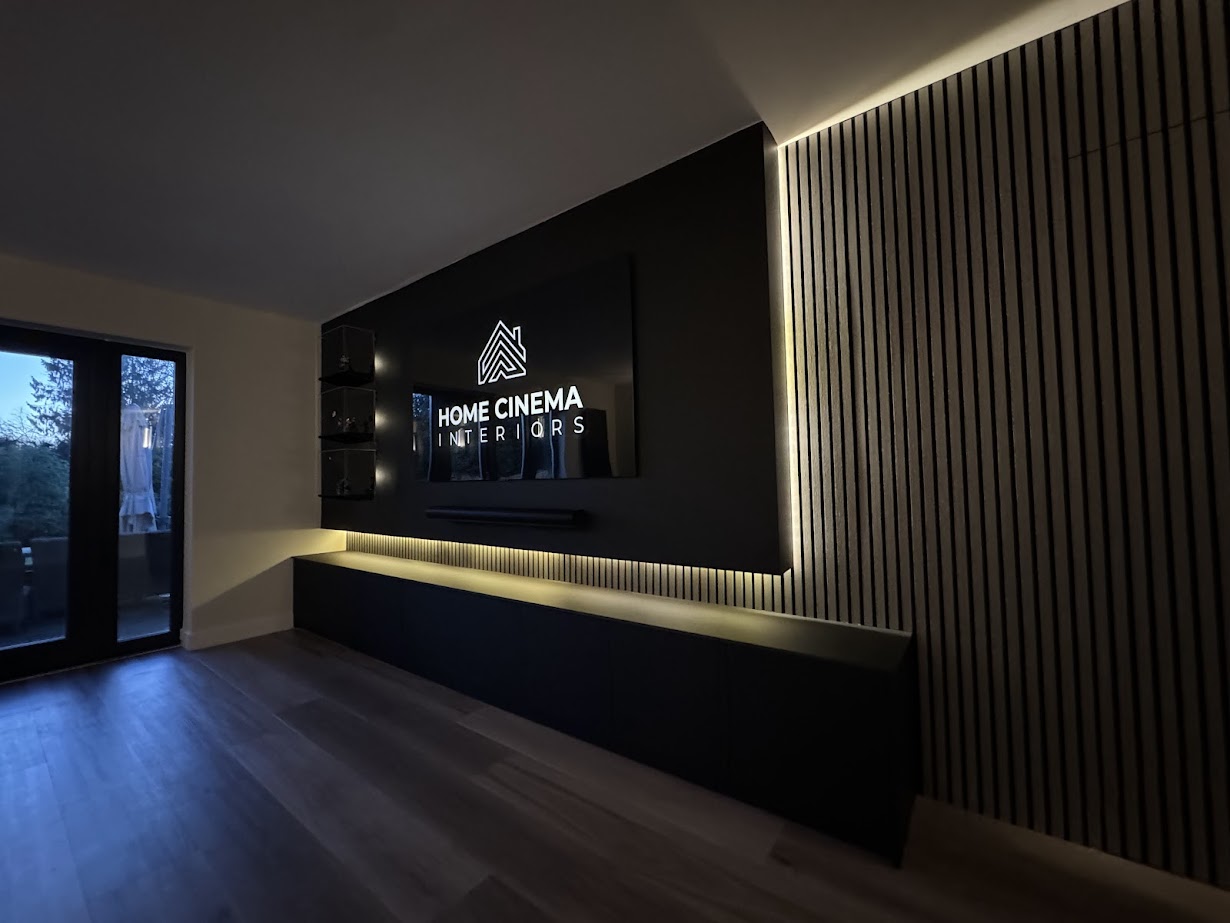
Media Wall with LED Lighting
11. How permanent do you want the installation to be?
This is an increasingly important consideration.
A traditional built-and-plastered Media Wall can create a beautiful, architectural finish and a strong sense of permanence. It can be fully bespoke, painted to your chosen colour and designed specifically around the room.
However, it also involves more construction, more disruption and a greater commitment to the existing layout.
A no-build or bespoke feature wall offers an alternative.
It can provide storage, a fireplace, feature panelling, lighting and a professionally integrated television without constructing an entirely new plasterboard wall.
For some homeowners, this can be particularly appealing if they want less disruption or don’t want the same level of permanence.
12. What is your budget?
Budget isn’t simply about the cost of the materials.
The type of Media Wall, level of joinery, AV equipment, fireplace, lighting, finishes and installation requirements can all have a significant effect on the final cost.
It is therefore useful to establish a realistic budget early in the design process.
A good designer should be able to work within that budget and help prioritise the elements that will make the biggest difference to the finished space.
13. Think about the future
Technology changes quickly.
A Media Wall should ideally be designed with some degree of future-proofing in mind.
Consider how equipment might change, whether additional HDMI or network connections could be useful, whether you may upgrade your television, and whether your sound system might evolve in the future.
Good cable management and sensible access to AV equipment can make future upgrades considerably easier.
The most important decision: design everything together.
Perhaps the biggest mistake when planning a Media Wall is treating each element as a separate decision.
The TV is chosen first.
Then the fire.
Then the furniture.
Then the lighting.
Then someone works out where the cables need to go.
A successful Media Wall works the other way around.
The television, fireplace, storage, lighting, AV equipment, cabling, materials and overall interior design should all be considered together from the beginning.
That’s what allows a Media Wall to feel like it genuinely belongs in the room rather than looking like a collection of individual products assembled around a television.
At Home Cinema Interiors, our approach combines AV expertise with bespoke carpentry and interior design, allowing us to take the project from initial concept through to the finished installation.
Whether you’re looking for a traditional chimney breast Media Wall, a shelving and storage solution or a lower-disruption bespoke feature wall, the aim is the same: to create a space that looks fantastic, works brilliantly and is designed specifically around the way you live.
The best Media Wall isn’t necessarily the biggest or most elaborate. It’s the one that gets every decision right for your home.


